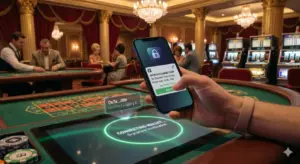
Some online casinos use a standard account login, while others connect through a shared identity system that lets one set of credentials open more than one casino site. This is known as single sign-on, or SSO. It is the same general idea behind “continue with Google” or other shared login buttons, but applied to online gambling.

For players, the appeal is convenience. Instead of remembering separate usernames and passwords for every casino, one verified login can connect to multiple platforms within the same network. The trade-off is that this one account becomes more important to protect. If someone gets access to it, they may be able to reach every connected casino profile, not just one.
This guide explains how casino single sign-on works, how to recognize a genuine login flow, and what Jetbet players should check before entering credentials or linking accounts.
What single sign-on means at a casino
Single sign-on, often shortened to SSO, lets one trusted account vouch for you across many separate services. You prove who you are once, to the system that holds your identity, and each connected site accepts that proof instead of making you register again. If you have ever used a “continue with Google” button, you have already used SSO. Casinos apply the same pattern, with a gambling-specific provider standing in the middle.
The appeal for a player is obvious: one account to remember and one place to manage security, rather than a drawer full of near-identical passwords. The appeal for the casino is quieter but just as real. Onboarding is faster because a returning identity skips most of the sign-up form, and the security burden of storing credentials shifts to a specialist provider built for it.
What Single Sign-On Means at an Online Casino
Single sign-on allows a trusted identity provider to confirm who you are across several connected websites. Rather than creating a separate login for every casino, you sign in once through the provider, and the casino accepts that authentication.
In simple terms, the casino does not need to store or check your password directly. Instead, it relies on the login provider to verify your identity and send you back with an active session.
This can make the sign-in process faster and reduce the number of passwords a player has to manage. It can also improve security when the provider supports stronger methods such as passkeys, biometrics, or two-factor authentication.
The important point is that SSO is not the same as a casino account being shared across every operator. The login may be shared, but each gambling site still has its own rules, account settings, bonuses, verification process, withdrawal limits, and responsible gaming tools.
How Shared Casino Logins Usually Work
A shared login normally begins on the casino’s sign-in screen. Instead of typing a username and password directly into the casino’s own form, the player selects an option such as “sign in with” a trusted identity provider.
From there, the process usually looks like this:
- You choose the single sign-on option on the casino login page.
- The casino redirects you to the provider’s official portal.
- You authenticate with a password, passkey, biometric check, or second factor.
- The provider confirms your identity.
- You are redirected back to the casino and logged in.
That redirect is one of the most important safety checks. A real SSO process should send you to the official provider portal, not to a random page that only looks like a login screen.
If a page asks for your shared login credentials without a proper redirect, or if the address does not match the provider’s real domain, stop before entering anything.
Why Casinos Use Single Sign-On
For players, the biggest benefit is convenience. One login can reduce password fatigue, make it easier to join another connected casino, and simplify access across sites.
For operators, SSO can also make onboarding smoother. Returning players can be recognized more quickly, and the technical burden of managing credentials may be handled by a specialist identity provider.
Security is another reason these systems exist. A good identity provider can support stronger login methods than a basic password form, including passkeys, app-based authentication, fingerprint login, face recognition, or two-factor approval.
However, convenience should never be mistaken for automatic safety. A shared login is only as secure as the way it is protected.
What Jetbet Players Should Check Before Using a Shared Login
Before using any shared login connected to a casino, players should confirm three things: where the login starts, where it redirects, and what information is being requested.
The login should begin from the official casino site, not from an unsolicited link in an email, ad, text message, or social media post. If you receive a message claiming that your account needs urgent verification, go directly to the official site instead of clicking the link.
The redirect should take you to the real identity provider’s portal. Check the full address carefully. A fake page may copy logos, colors, buttons, and wording, but it cannot use the provider’s exact official domain unless it actually controls it.
The information requested should also make sense. A login page should not ask for full card details, banking information, identity documents, or unrelated personal data simply to sign in. Verification may be required by the casino, but that should happen through official account or support channels, not through a suspicious login page.
How Single Sign-On Differs From a Normal Casino Login
A normal casino login belongs to one site. You register with that casino, and those credentials work only there.
Single sign-on sits one level above that. The credentials belong to the identity provider, and connected casinos trust that provider to confirm who you are.
That creates a different security model. Instead of protecting several separate passwords, you are protecting one central login. This can be safer if the account uses strong authentication. It can also be riskier if the account relies on a reused password or has no second factor enabled.
For Jetbet players, the practical takeaway is simple: if a shared login is used, treat it like a master key. Do not reuse its password, do not share it, and do not enter it anywhere except the official login flow.
One Login Can Open Many Doors
The biggest advantage of SSO is also its biggest risk. One login may give access to several connected casino accounts. If that login is protected well, the system can be convenient and secure. If it is compromised, the damage can spread quickly.
A stolen password on a single casino account is bad enough. A stolen shared login can be worse because the attacker may try to access every platform connected to that identity.
That is why players should use the strongest security options available. A passkey, biometric approval, or two-factor authentication adds protection that a password alone cannot provide.
It is also worth checking the provider dashboard when available. Many shared login systems let users review active devices, recent sign-ins, linked services, or approval requests. If you see a device, location, or casino connection you do not recognize, remove it and secure the account immediately.
Verification Still Happens at Each Casino
A shared login does not usually replace casino verification. It may confirm your identity for sign-in purposes, but each casino can still require its own Know Your Customer checks before deposits, withdrawals, or account changes are approved.
This matters because players sometimes assume that one shared login means every casino rule carries over. It does not.
Each site may have its own:
- Identity verification process
- Deposit and withdrawal rules
- Bonus terms
- Restricted locations
- Payment methods
- Responsible gaming settings
- Account limits
So even if one login helps you access multiple casinos, you still need to read the rules of the specific platform you are using.
Watch for Fake Casino Login Pages
A fake casino login page may look almost identical to the real one. It may copy branding, page layout, and even the wording around sign-in. The giveaway is usually not how it looks, but where it lives and how you reached it.
Be cautious if:
- The page was reached from an unsolicited message
- The web address has extra words, hyphens, or swapped letters
- The login does not redirect to the real provider portal
- The page asks for more than normal login details
- The site pressures you with urgent account warnings
- The page offers a bonus that seems unrealistic
- Someone claims they can recover or unlock your account for a fee
A real login flow should be predictable. You start on the official casino site or provider portal, authenticate through the correct domain, and return to the casino with an active session.
Anything outside that flow deserves caution.
When a Shared Login Will Not Work
If a shared casino login fails, the problem may not be with the casino itself. It may be connected to the authentication method.
Common issues include:
- A passkey tied to a device you no longer have
- An expired one-time code
- A mistyped authentication code
- An outdated app
- A browser session or cookie issue
- A second-factor approval that did not complete
- A temporary account security block
Start by checking the login method. Make sure you are approving the request on the right device, using a current app, and entering any codes before they expire.
If the page stalls during the redirect, try a clean browser session, clear cookies, or use another trusted browser. If the issue appears to be account-related, use official support channels rather than third-party recovery links.
How to Protect a Shared Casino Login
A shared login should be secured more carefully than a standard one-site casino password. Since it may connect to several accounts, treat it as a high-value credential.
Use a strong, unique password if a password is required. Do not reuse a password from email, banking, social media, or another casino site.
Enable two-factor authentication, a passkey, or biometric login if available. These protections reduce the risk of someone signing in with a stolen password alone.
Keep your recovery email secure. If someone gains control of your inbox, they may be able to reset your casino login or approve account changes.
Review linked devices and connected casino accounts regularly. Remove anything you no longer use or do not recognize.
Be careful with approval prompts. If you receive a login approval request that you did not start, deny it and change your password immediately.
Safer Access Starts With the Official Route
The safest way to use any casino login system is to start from the official source. That means typing the official casino address, using a verified bookmark, opening the official app, or going directly to the identity provider’s real portal.
Do not trust a login page just because it looks polished. A cloned page can copy design, but the address and redirect behavior are harder to fake.
For Jetbet players, the rule is straightforward: use the official site, check the address, and protect any shared login as if it opens more than one account. Convenience is useful, but only when the login behind it is properly secured.
Frequently asked questions
Is one login safe across several casinos?
It can be, and that rests almost entirely on how you secure the account itself. A fingerprint, face scan, passkey, or two-factor step makes it hard to misuse.
A reused password with no second factor concentrates the risk, since one breach would reach every connected casino.
Do I still have to verify my identity at each casino?
Yes. The login is shared, but verification is not. Each casino runs its own document checks before deposits or withdrawals, and you submit those to the casino directly.
What if I lose access to my login method?
Use the official Inclave account recovery, never a link sent to you unprompted. If a passkey was tied to a lost device, recover through the portal or app, then review your device list and remove anything you do not recognize.
How do I know I am on the real login page?
A real login is reached by selecting the Inclave button at a casino, which redirects you to the official portal. Check the address matches Inclave’s own domain.
Any page asking for your credentials without that redirect should be treated as phishing.